
Transfer out and…
Buy a regular income for life (an Annuity)
At a glance…
If you choose to transfer out of the Aliaxis DB Scheme and buy a regular income, known as an annuity, you’ll have:
- A guaranteed income for the rest of your life
- More choice – choose the level of benefits and cover you need to match your priorities
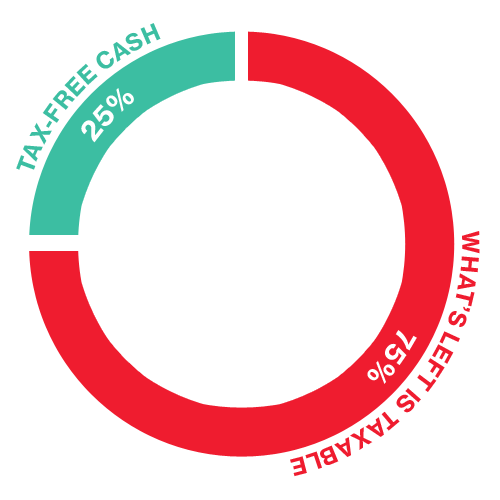
- Tax-free cash – the option to typically take up to 25% of your transfer value as, currently, a tax-free cash lump sum
- Optional ill health annuity if you have recognised health issues, you are a smoker, drinker, have high blood pressure etc. This means you could get a higher income and is known as enhanced terms
- Optional yearly increases to your income to protect against increases in the cost of living (inflation), in exchange for a lower starting income, known as an increasing annuity
- Optional pension for your eligible spouse/civil partner/qualifying dependent’ on your death, in exchange for a lower regular income, known as a joint-life annuity
- Optional lump sum payable to your spouse/civil partner/qualifying dependent’ if you die soon after retirement, known as a guarantee period.
How long might you live?
People are living longer. Improved healthcare, working conditions and a reduction in smoking rates have all contributed to increasing life expectancy from generation to generation.
Understanding how long you might live is an important part of planning for retirement, especially if you’re considering the drawdown option, as you’ll need to make sure your money lasts as long as you need it to.
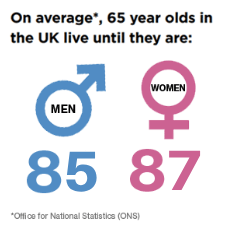
The National average for a typical 65-year-old, in good health, as at July 2024 is shown on the right.
So, if you are retiring at age 65, you could live for at least 20 years after that (based on data from the Office of National Statistics). That’s 20 years of paying for the things you’ll need and want.
But we’re not all ‘typical’, it’s possible you could live a shorter time or much longer than this. In fact, 1 in 4 65-year-old retiring now could live in to their 90s and 1 in 33 could live to 100, so they’d need to manage their money wisely!
Harold’s choice
What was important to Harold was a regular income each month, similar to the Scheme pension, but tailored to better suit his circumstances. Harold took financial advice and was recommended to transfer out of the Scheme and buy an annuity from an insurance company.
Harold’s choice is just an example and does not suggest a particular option that you should choose yourself. Please look at all of the options available to you and consider seeking independent financial advice before making any decisions about your own benefits.

Why this option might suit you
Here is a list of characteristics that this option provides or doesn’t provide. Have a look through and see if these characteristics suit your personal circumstances. For example, is the reassurance of a regular income for the rest of your life a priority or would you rather withdraw money as and when you need to?
 |
The reassurance of a regular income for life | ✔ YES |
Buying a regular income for life from an insurance company gives you the reassurance of a regular income paid, normally monthly, to you for as long as you live, a bit like your salary is now and in a similar way to your Company Pension. This is particularly useful if:
|
 |
Pension increases to protect against inflation | OPTIONAL | You can choose to buy an annuity that increases in value each year to protect you against increases in the cost of living (inflation), by this we mean as the cost of things like fuel, bread, milk etc. go up, so does your pension income. This comes at the cost of a reduction in how much money you get each month. You can read more below in the section ‘Income for life annuity options’. |
 |
A pension for my spouse/civil partner/qualifying dependent on my death | OPTIONAL | You can choose to buy a joint-life annuity or an annuity with a guaranteed period which will provide an income to your spouse, partner or financial dependant when you die, giving additional reassurance for you and your loved ones. This comes at the cost of a reduction in how much money you get each month. You can read more below in the section ‘Income for life annuity options’. |
 |
Leaving an “inheritance” | X NO |
No, but there are some options to provide an income for your loved ones on your death. You can read more below in the section ‘Income for life annuity options’. |
 |
Something easy to manage | ✔ YES | Super easy, once you’ve bought your annuity, the income from it will be paid to you regularly, just like your salary is now. You’ll need to shop around for the right annuity for you, to learn more about this, you can visit the MoneyHelper website here. |
 |
Money to use now | ✔ YES | In exchange for a reduced regular income from your annuity, you can typically take up to 25% of your transfer value as a tax-free cash lump sum when you retire. |
 |
The flexibility to change my income when I like / need | X NO |
The amount you receive from your annuity will be fixed but could increase automatically each year if you choose that option. |
 |
The ability to invest my money myself | X NO |
There is no option to manage any investments. |
 |
Suitable if I expect to live a long time | ✔ YES |
Definitely. Your annuity will be paid to you for as long as you live. It’s worth noting that on average (based on national figures from the Office for National Statistics) we’ll live until our mid-80s, however there’s a 1 in 4 chance you’ll live in to your 90s and 3 in every hundred people retiring now will live to be 100 years old. |
Income for life (annuity) options
What are your options if you buy a regular income for life (an annuity)?
Feature
Option 1
Option 2
Comparison
Pension increases
An income which increases during retirement, either at a fixed rate or based on inflation.
This is known as an ‘increasing annuity’.
An income which remains level throughout retirement.
This is known as a ‘level annuity’.
- A level annuity will start at a higher initial amount than an increasing annuity but will not increase during retirement, so you need to be aware that inflation will erode the value of your income over time
- An increasing annuity will start at a lower initial amount than a level annuity but will increase (normally in line with inflation) during retirement.
Spouse’s pension
An income which continues to be paid to your spouse or civil partner upon your death (at a reduced level).
This is known as a ‘joint life annuity’.
An income which ceases on your death.
This is known as a ‘single life annuity’.
An annuity which includes an income for your spouse or civil partner after your death will be lower than an annuity paid just to you, as it is expected to be paid for longer.
Guarantee period
An income which stops on your death (or the death of your spouse or civil partner).
This is known as an annuity with ‘no Guarantee period’.
An income which is guaranteed to be paid for a minimum period.
This is known as an annuity with a ‘Guarantee period’.
- An annuity which includes a Guarantee period will have a lower income than an annuity which stops on your death
- However, if you die shortly after you start to receive your income, a Guarantee period will ensure your loved ones still get something back.
Health/enhanced terms
An income which does not take into account your health.
This is known as a ‘standard annuity’.
An income which takes into account your health.
This is known as an ‘enhanced annuity’.
- If you have a diagnosed medical condition, smoke or have a poor lifestyle, you may be eligible for enhanced terms
- An annuity with enhanced terms will typically have a higher income than a standard annuity as it is expected to be paid to you for less time.
Tax
Tax-free cash lump sum
- You can take some of your Aliaxis DB Scheme benefits as tax-free cash (usually up to 25% of the benefit value)
- The amount you could take depends on the value of benefits you transfer out of the Aliaxis DB Scheme and is subject to the Lump Sum Allowance (see Tax & State benefits section).
Income (subject to tax)
- Your annual income will be taxed at your marginal rate of income tax for that year (20%, 40% or 45%)
- As your annuity income is stable, you can expect to pay a similar level of tax each year (subject to any other income you have).